Field guide · Assam

Birds in the campus

The ten species our system listens for. 8 of them are in BirdNET's model; the other 2 need our custom classifier — we say so on each card rather than pretend.
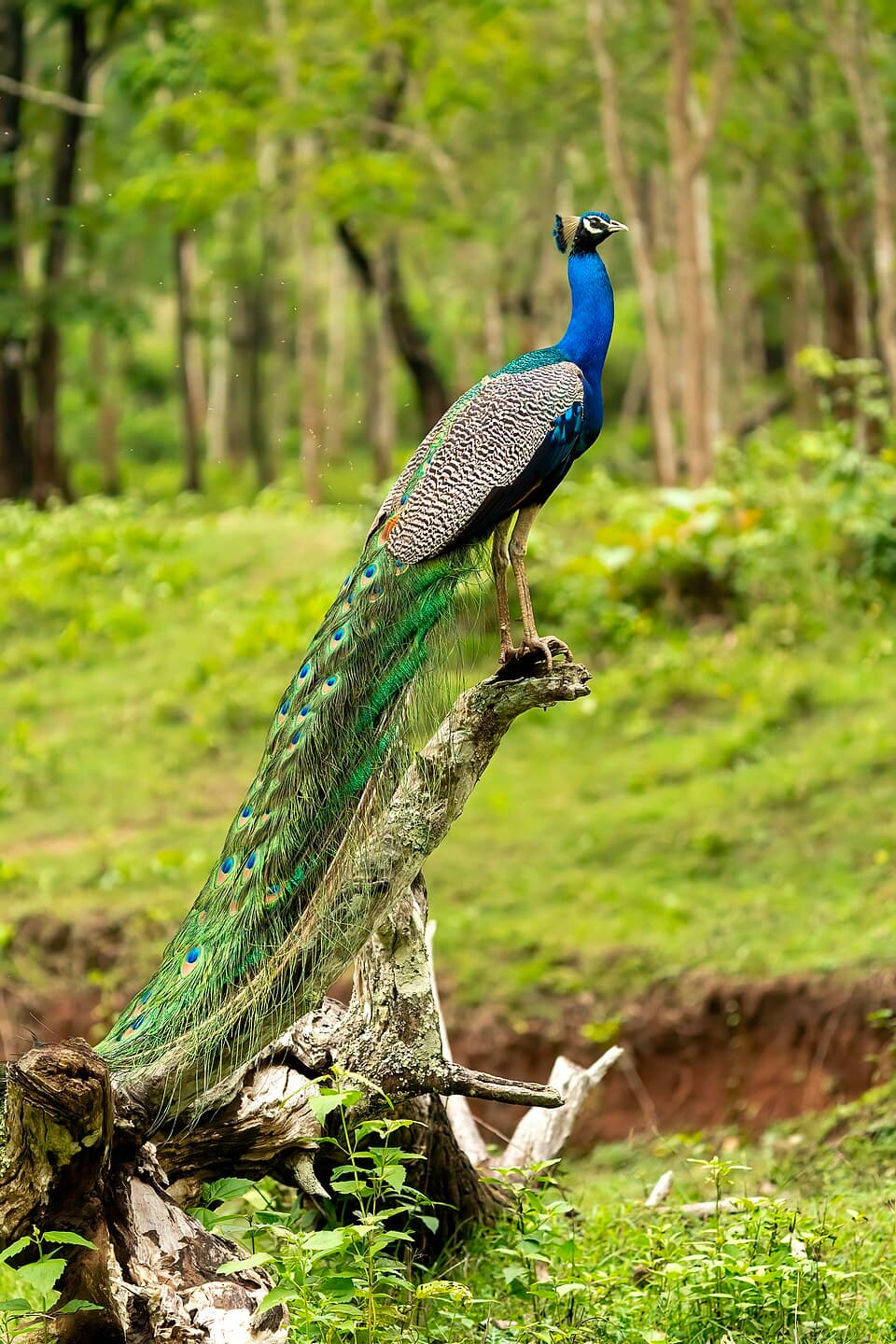
  • Indian Peafowl (Pavo cristatus)
    Least Concern

    Indian Peafowl

    Pavo cristatus

    India's national bird. Males carry an iridescent blue neck and a long train of eye-spotted feathers; females are browner with a green neck. They forage on the ground and roost high in trees at night.

    Listen for: A loud, far-carrying “may-awe”, most often at dawn, at dusk and before rain.

    In BirdNET; kept eligible even where the range filter would drop it.

    Photo: Kandukuru Nagarjun, CC BY 2.0, via Wikimedia Commons
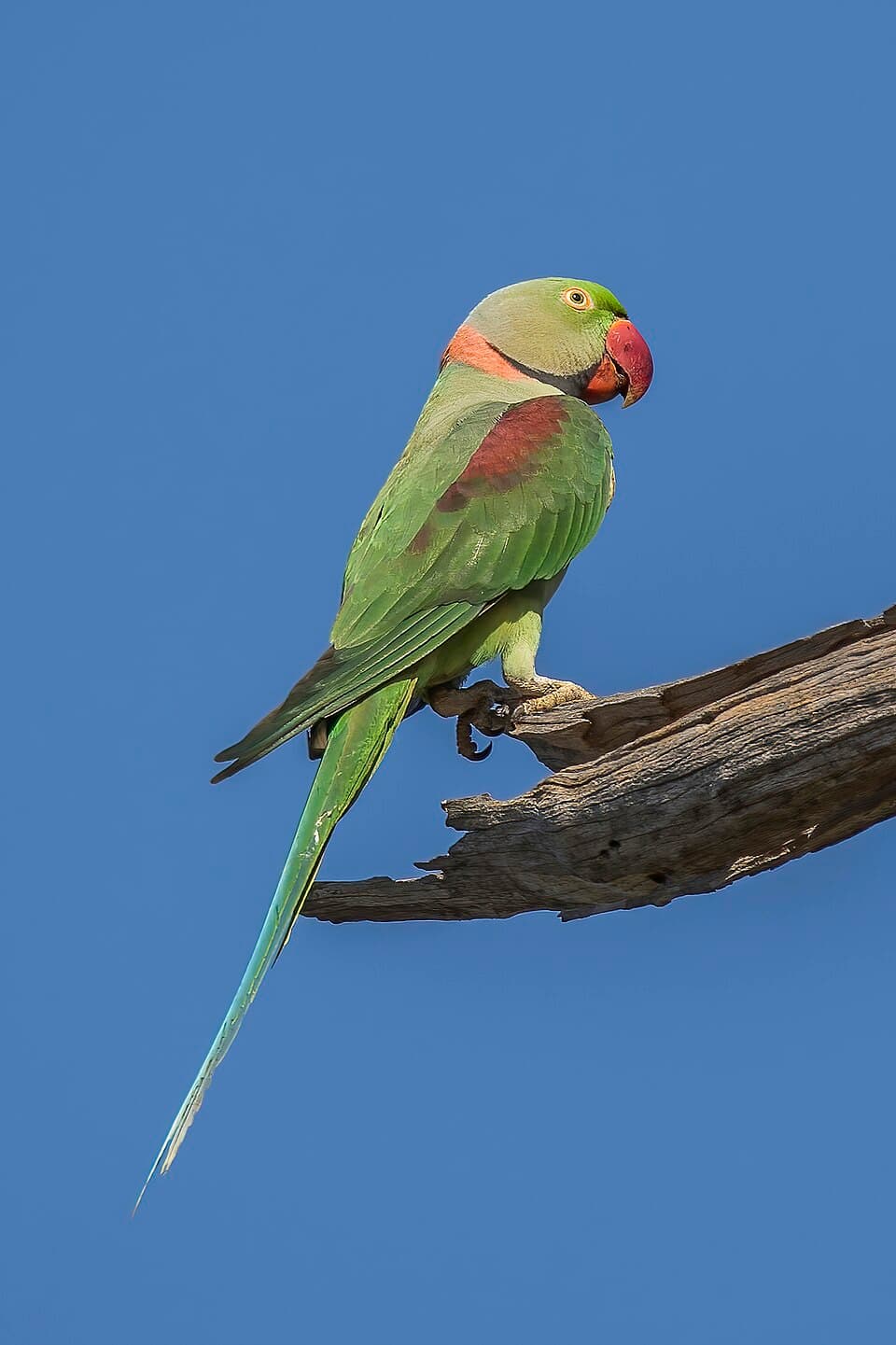
  • Alexandrine Parakeet (Psittacula eupatria)
    Near Threatened

    Alexandrine Parakeet

    Psittacula eupatria

    The largest of the Asian ring-necked parakeets: green with a maroon shoulder patch and a heavy red bill. Adult males add a black-and-rose collar. Usually in noisy flocks around tall fruiting trees.

    Listen for: Loud, harsh, rolling screeches — deeper than the smaller Rose-ringed Parakeet.

    In BirdNET. Rose-ringed Parakeet is used as a look-alike negative in training.

    Photo: Charles J. Sharp, CC BY-SA 4.0, via Wikimedia Commons

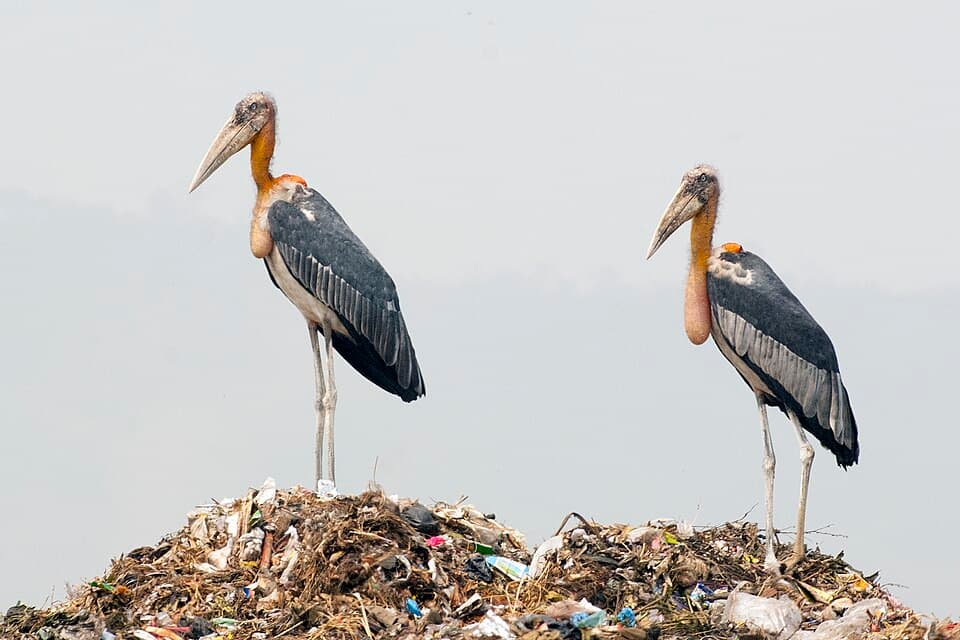
  • Greater Adjutant (Leptoptilos dubius)
    Endangered

    Greater Adjutant

    Hargila

    Leptoptilos dubius

    A huge stork with a bare pinkish head and a hanging throat pouch. Assam holds most of the world's remaining population, and the birds are a familiar sight around Guwahati's wetlands and landfills.

    Listen for: Mostly silent — bill-clattering, grunts and hisses at the nest rather than song.

    Not in BirdNET v2.4. Needs the custom classifier, and audio is a weak signal for it.

    Photo: Yathin S Krishnappa, CC BY-SA 3.0, via Wikimedia Commons

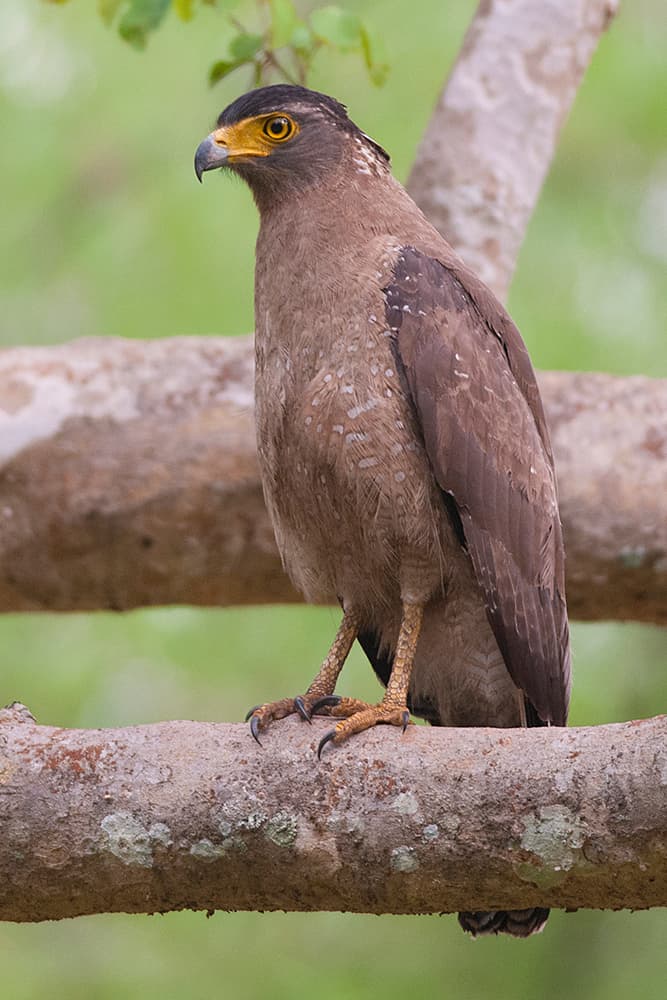
  • Crested Serpent-Eagle (Spilornis cheela)
    Least Concern

    Crested Serpent-Eagle

    Spilornis cheela

    A dark, broad-winged forest eagle with bright yellow facial skin and a short, fan-like crest. As the name says, it feeds largely on snakes, often watching from a shaded perch.

    Listen for: A ringing, whistled “kluee-wip-wip” given while soaring over the canopy.

    In BirdNET; best caught by its flight whistle, so expect lower recall on perched birds.

    Photo: Yathin S Krishnappa, CC BY-SA 3.0, via Wikimedia Commons

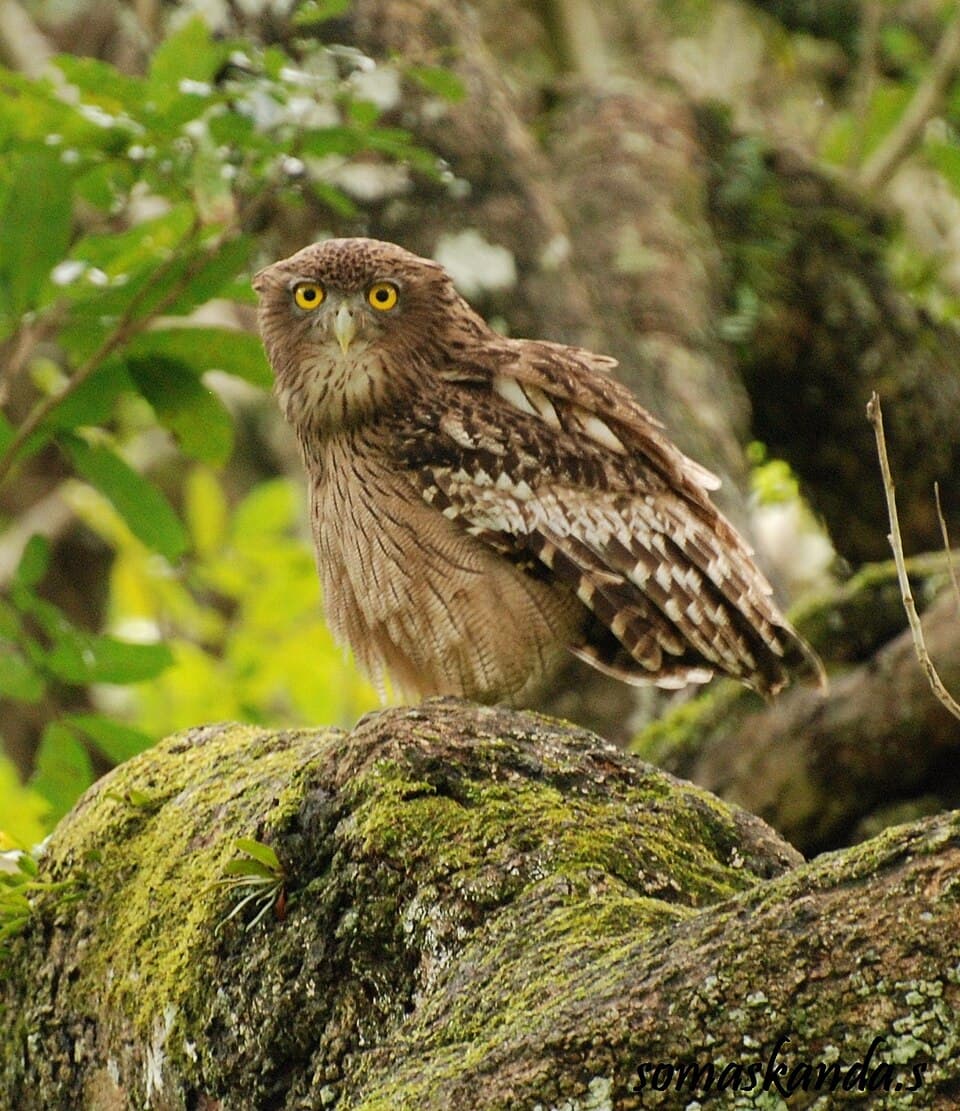
  • Brown Fish-Owl (Ketupa zeylonensis)
    Least Concern

    Brown Fish-Owl

    Ketupa zeylonensis

    A large owl with loose ear tufts and golden-yellow eyes that lives near water. It hunts fish, frogs and crabs at dusk and spends the day hidden in dense trees.

    Listen for: A deep, booming “boom-o-boom” after sunset.

    In BirdNET.

    Photo: Somaskanda, CC BY-SA 3.0, via Wikimedia Commons

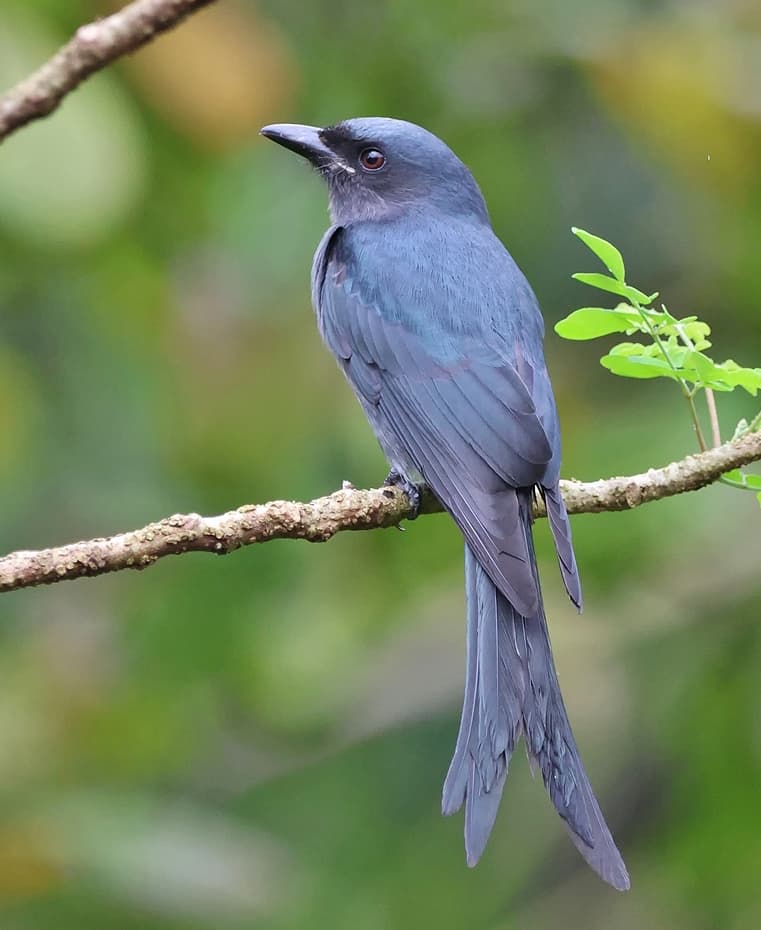
  • Black Drongo (Dicrurus macrocercus)
    Least Concern

    Black Drongo

    Dicrurus macrocercus

    Glossy black with a deeply forked tail, usually perched on a wire or bare branch. It sallies out after insects and fearlessly chases crows and raptors away from its nest.

    Listen for: Varied harsh “ti-tiu” calls and a good deal of mimicry.

    In BirdNET, but stock scores peaked at 0.51 in tests; the planned custom classifier should lift it.

    Photo: Swardeepak, CC BY-SA 4.0, via Wikimedia Commons

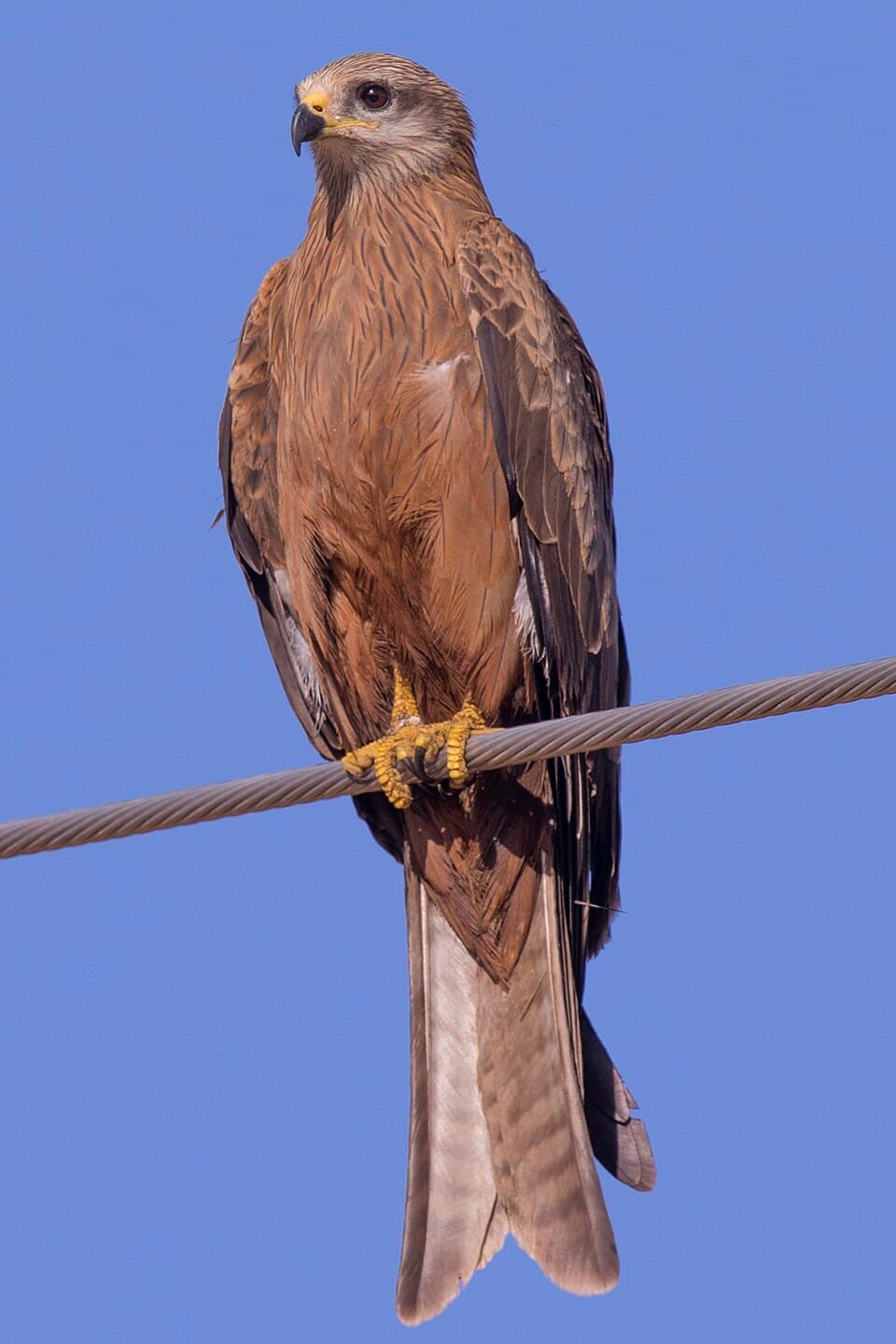
  • Black Kite (Milvus migrans)
    Least Concern

    Black Kite

    Milvus migrans

    A medium-sized brown raptor with a shallow forked tail that it twists as it steers. Very at home around towns, it circles over campuses and markets looking for scraps.

    Listen for: A thin, whinnying whistle, often from birds circling overhead.

    In BirdNET, but stock scores peaked at 0.43 in tests; the planned custom classifier should lift it.

    Photo: Andreas Trepte, CC BY-SA 4.0, via Wikimedia Commons

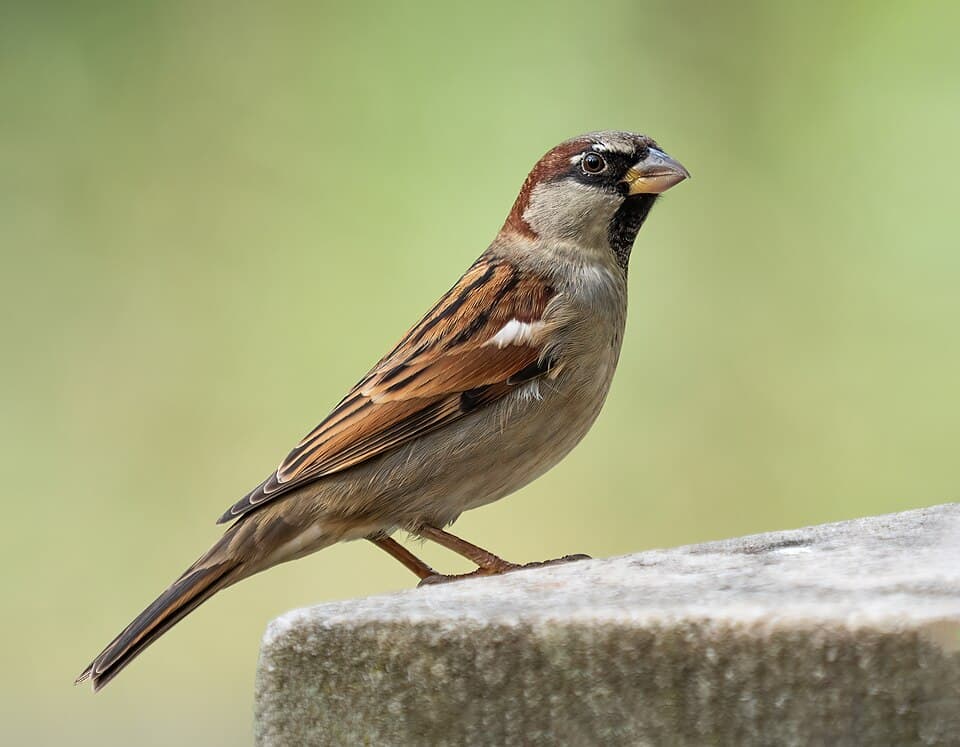
  • House Sparrow (Passer domesticus)
    Least Concern

    House Sparrow

    Passer domesticus

    The small brown bird that lives wherever people do. Males have a grey crown, chestnut nape and black bib; females are plain buff-brown. Nests in building gaps and eaves.

    Listen for: Constant cheerful chirping, loudest from groups in hedges and roofs.

    In BirdNET. Tree Sparrow is used as a look-alike negative in training.

    Photo: Rhododendrites, CC BY-SA 4.0, via Wikimedia Commons

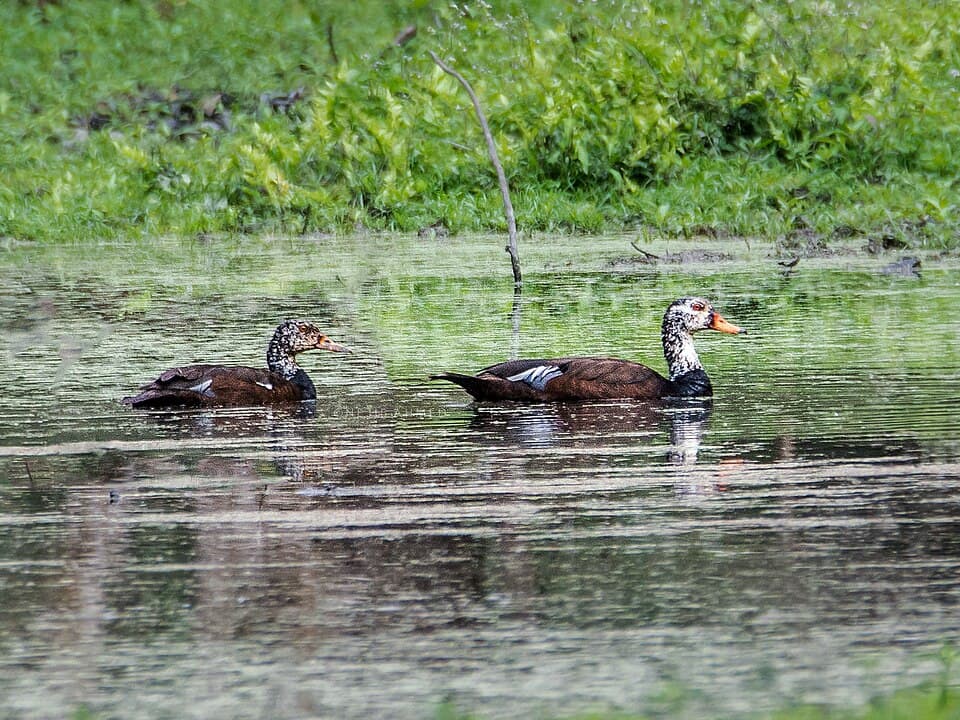
  • White-winged Duck (Asarcornis scutulata)
    Endangered

    White-winged Duck

    Deohanh

    Asarcornis scutulata

    The state bird of Assam: a large, shy forest duck with a dark body, a white head flecked with black and white wing patches. It keeps to secluded pools in evergreen forest.

    Listen for: Drawn-out honks and wheezy whistles, mostly at dawn and dusk.

    Not in BirdNET v2.4. Detectable only via the custom classifier, if enough recordings exist.

    Photo: Nejib Ahmed, CC BY-SA 4.0, via Wikimedia Commons

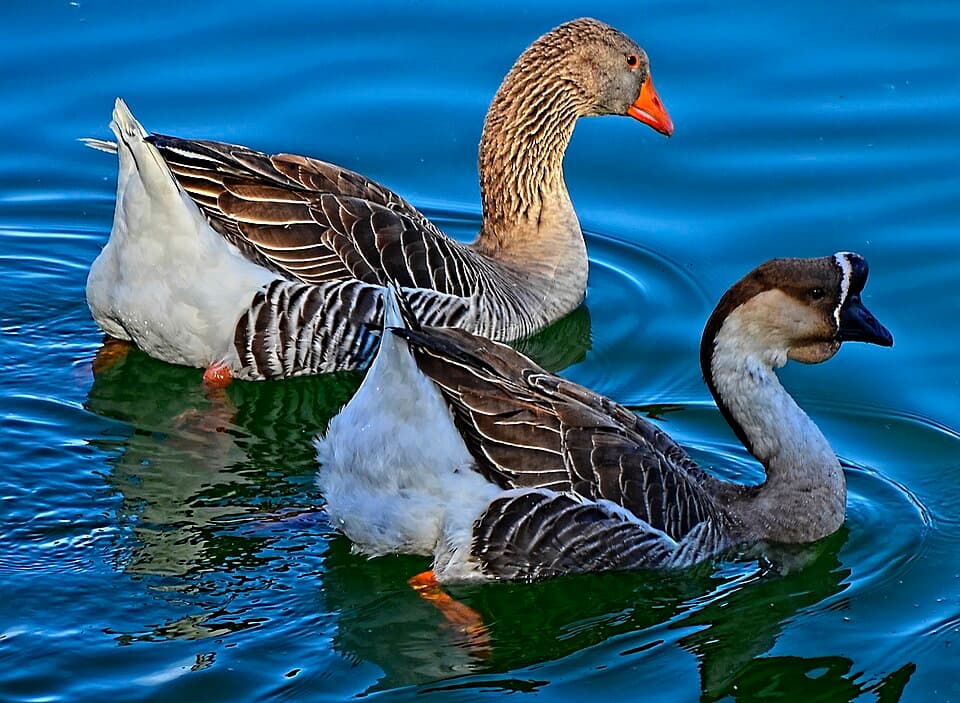
  • Domestic Goose (Anser anser / A. cygnoides (domestic))
    Domestic

    Domestic Goose

    Rajhanh

    Anser anser / A. cygnoides (domestic)

    Farmyard geese descend from the Graylag Goose and the Swan Goose, and still sound like them. They are kept around villages and campus ponds and make reliable watch-birds.

    Listen for: Loud honking, especially when disturbed.

    BirdNET has no domestic class; Graylag or Swan Goose detections are reported as domestic goose.

    Photo: Tomás Del Coro, CC BY-SA 2.0, via Wikimedia Commons